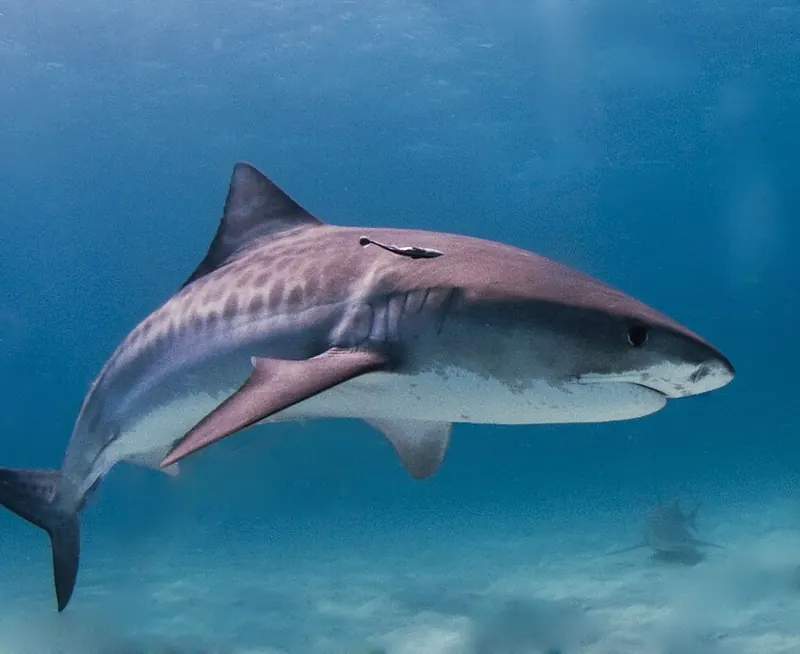
Elasmobranchii › Carcharhiniformes › Carcharhinidae
Tiger shark
Females top 5 m
The only recorded natural predator of the tiger shark is the orca.
Field Guide · Chapter 16 of 29
Swipe across, tap a card to turn it over, then scroll down its back. Try Look closer on a front, spin a globe, and lift the question on a park sign.
The only recorded natural predator of the tiger shark is the orca.
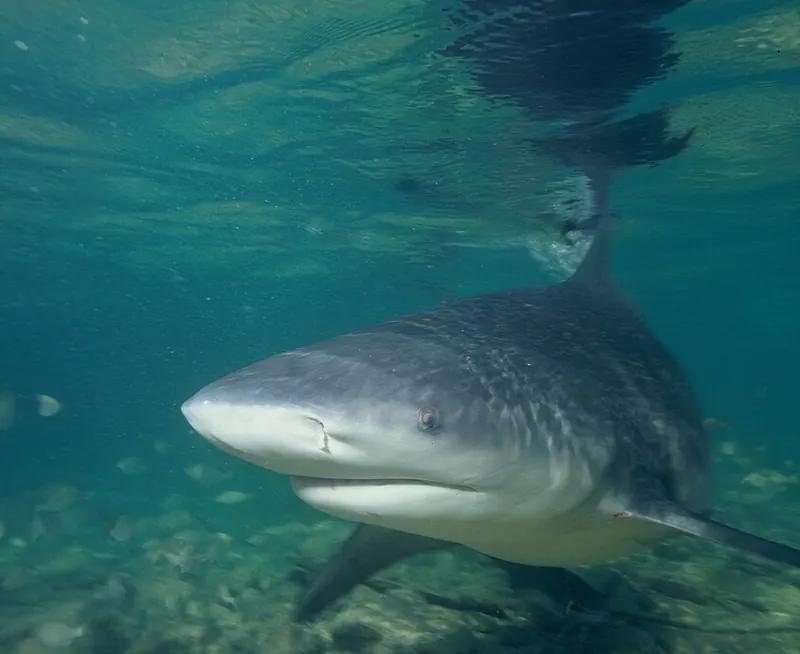
Some have swum over 1,100 kilometres inland, up the Mississippi to Alton, Illinois.
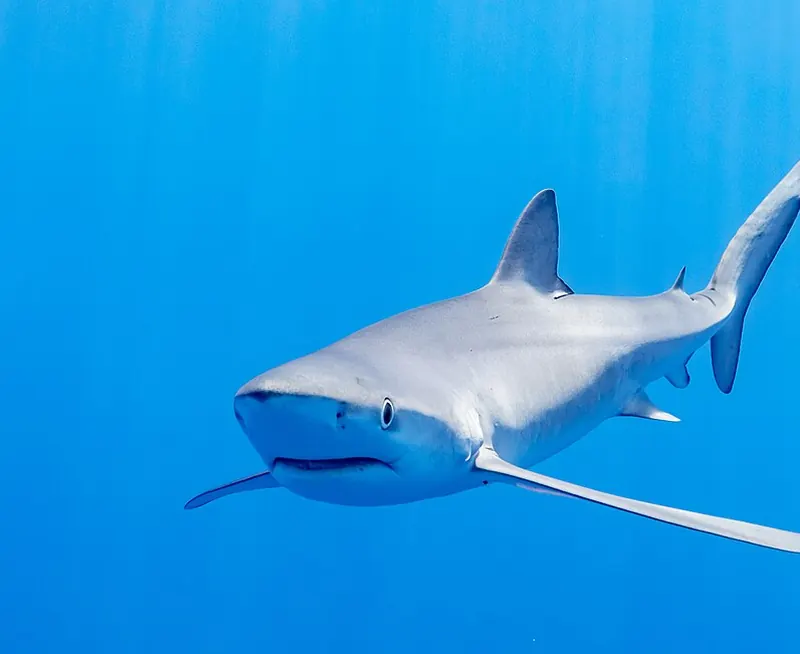
One blue shark mother can give birth to as many as 135 pups in a single litter.
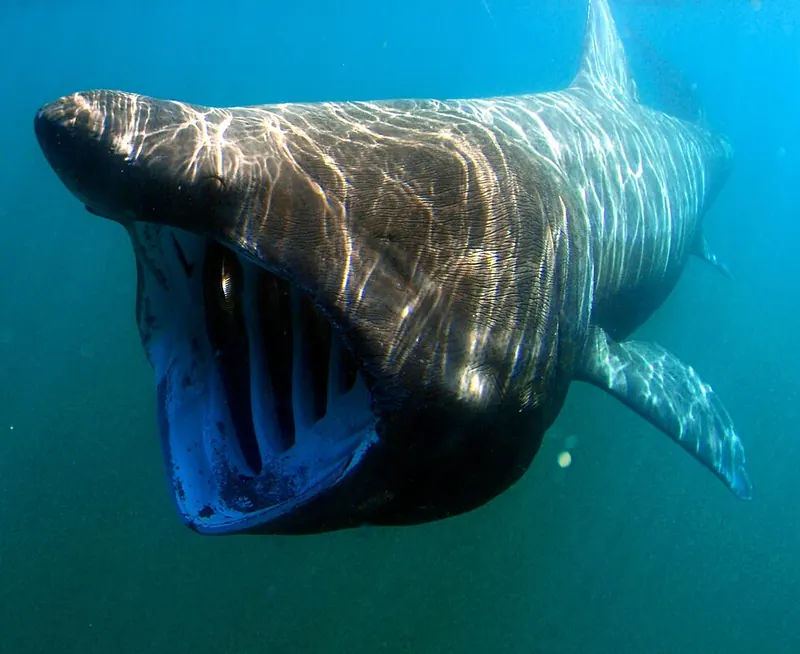
It is the second-largest living fish, after the whale shark.
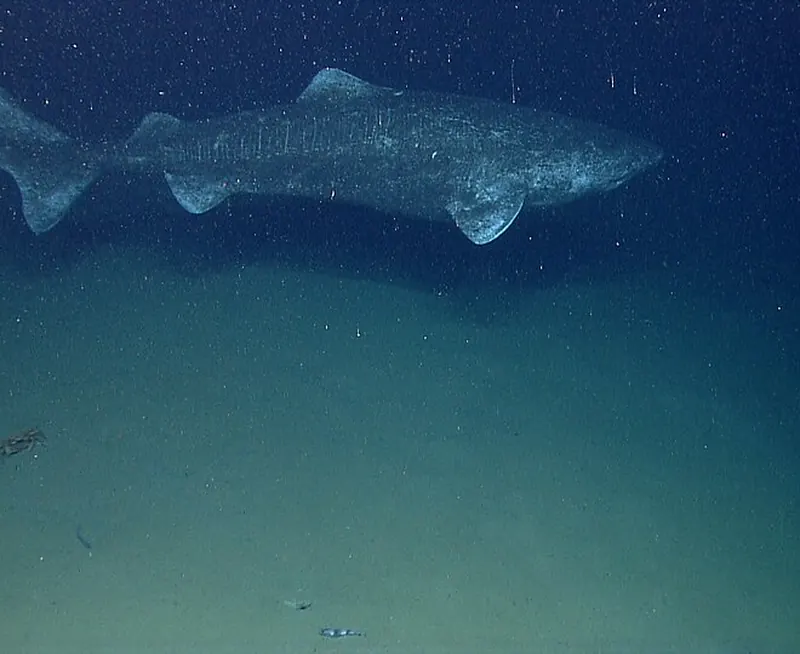
The longest-lived vertebrate known, living an estimated 272 to 510 years.
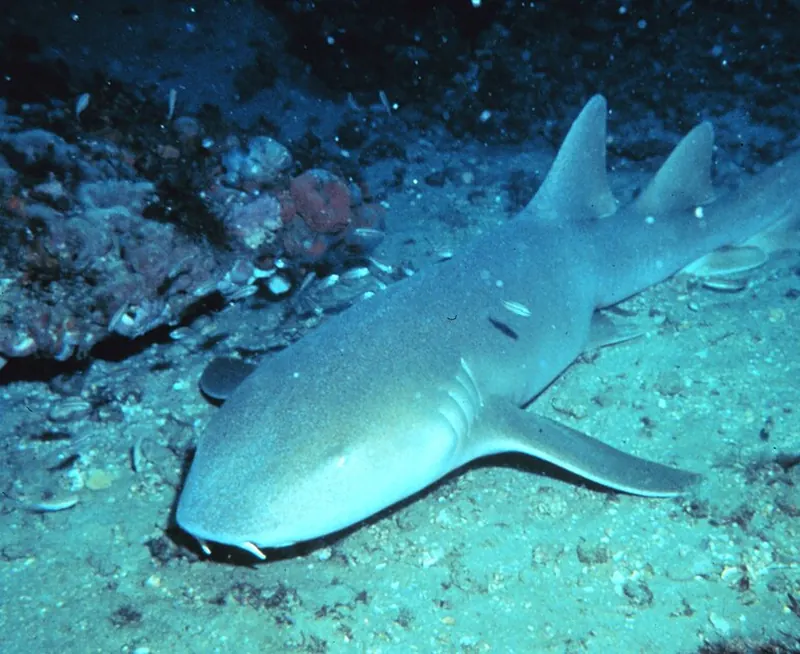
A nurse shark can suck with force among the highest recorded for any water-breathing animal with a backbone.
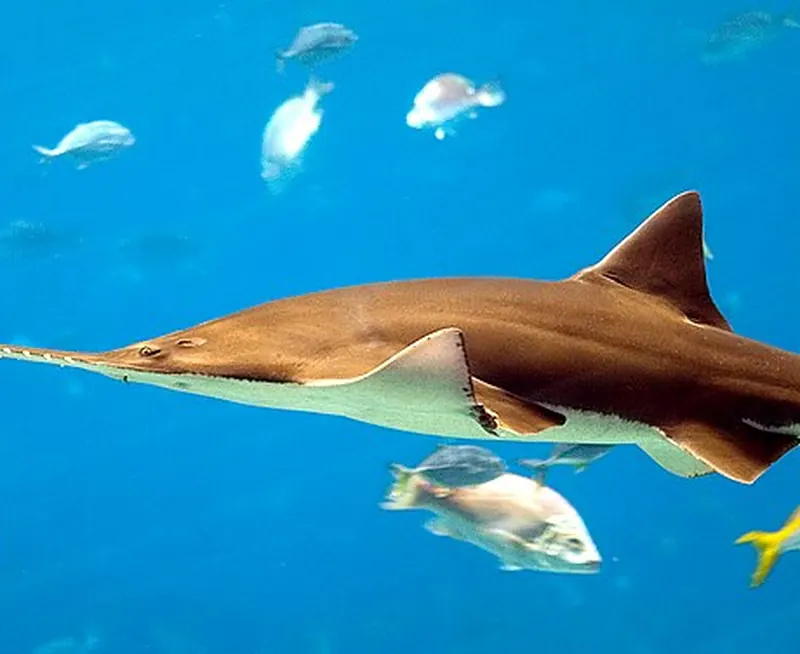
Scientists long thought its saw could sense prey or catch it, never both. It does both.
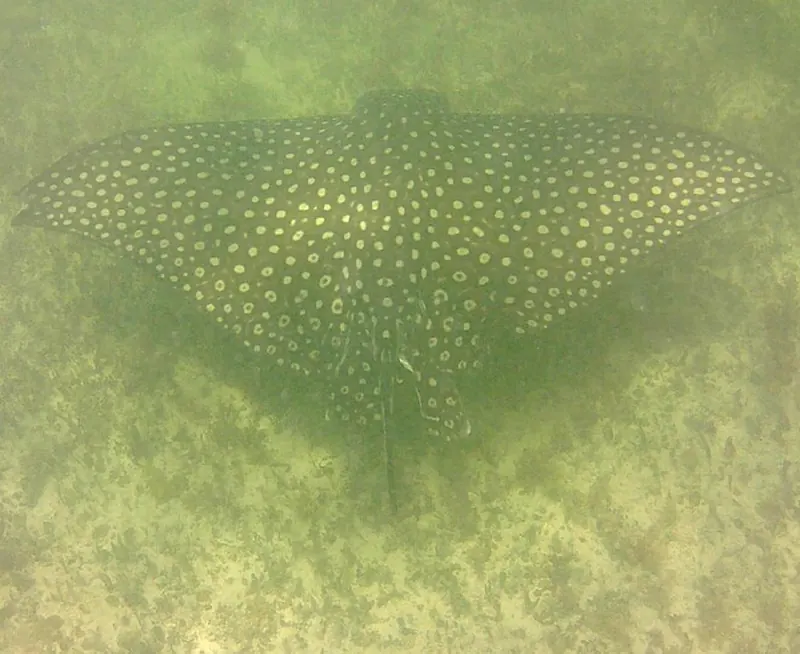
Unlike other rays, it digs in the sand with its snout, inside a cloud of sand that pours from its gills.
Every photograph and every outline comes from a real, openly licensed image, credited at the bottom of its card. Only plain charts are drawn.
The words on these cards are written by AI from the sources named on each card. Software matched every number and claim to a sentence in those sources. Mistakes are still possible, so follow a card's links before relying on it.
Globe dots are real recorded sightings from GBIF. Where a card says native range only, they are clipped to that range. Otherwise they can include zoos, gardens and places the species was introduced.