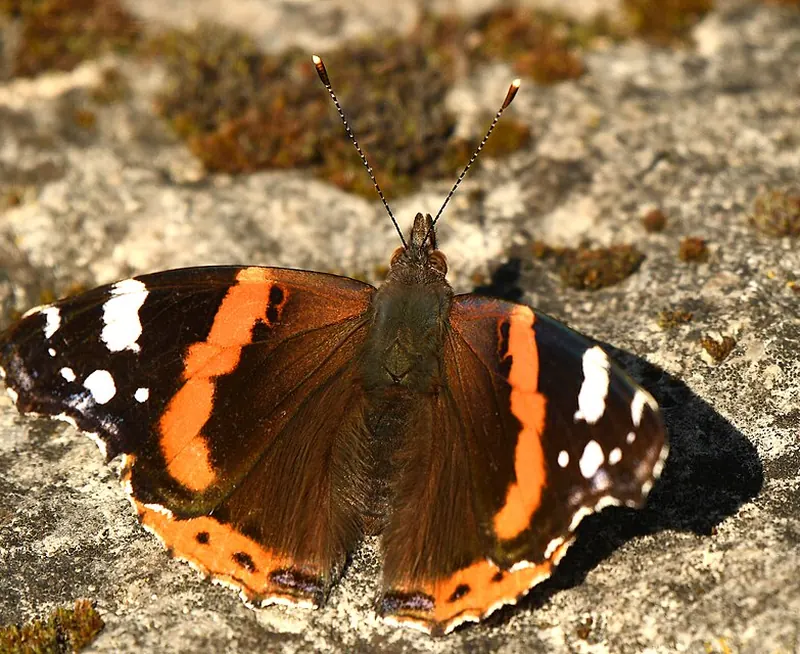
Insecta › Lepidoptera › Nymphalidae
Red admiral
About 5 cm across
A butterfly so calm you can often get very close before it flies off.
Field Guide · Chapter 19 of 29
Swipe across, tap a card to turn it over, then scroll down its back. Try Look closer on a front, spin a globe, and lift the question on a park sign.
A butterfly so calm you can often get very close before it flies off.
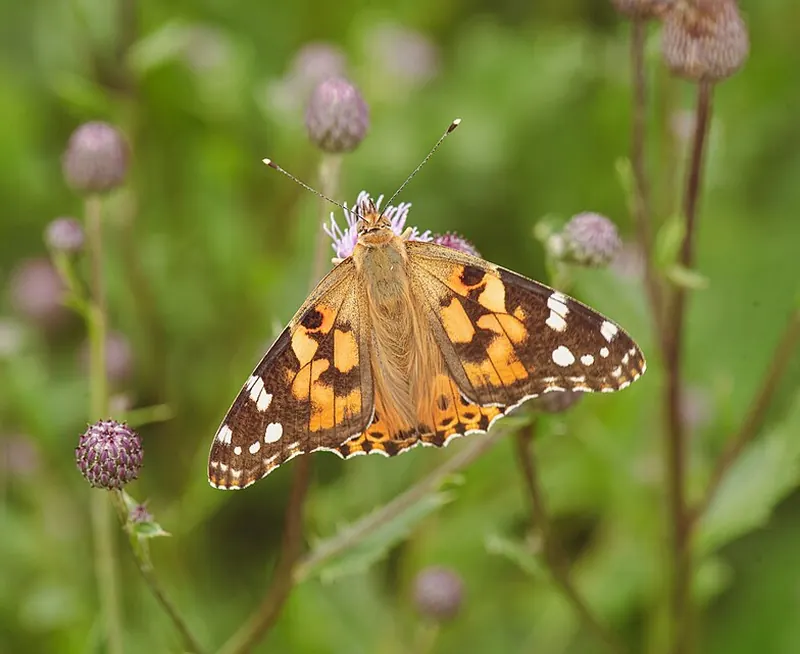
Painted ladies make a 14,500 km return trip, from tropical Africa to the Arctic Circle, over up to six generations.
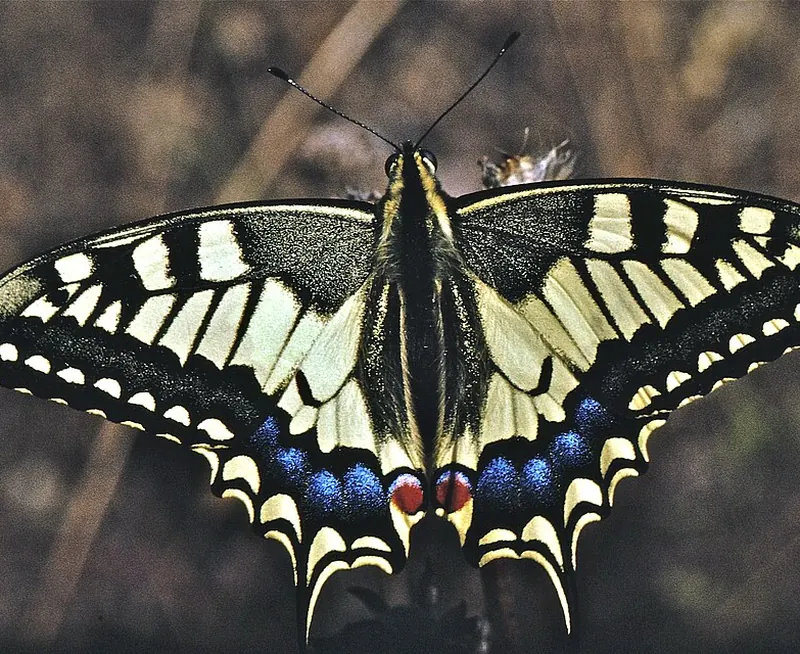
Despite its name, it is not restricted to the Old World. It reaches as far as Alaska.
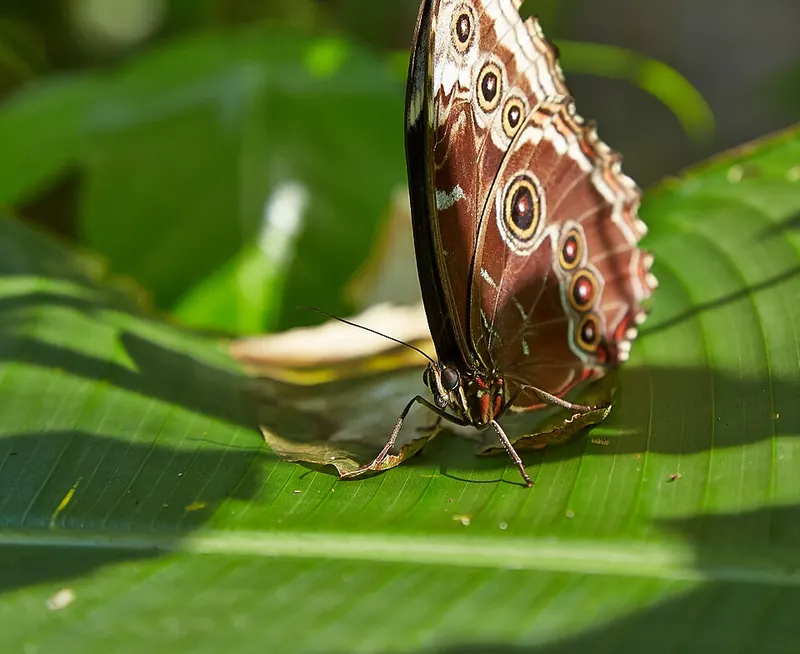
Collectors prized its blue so highly it was widely hunted in the 20th century.
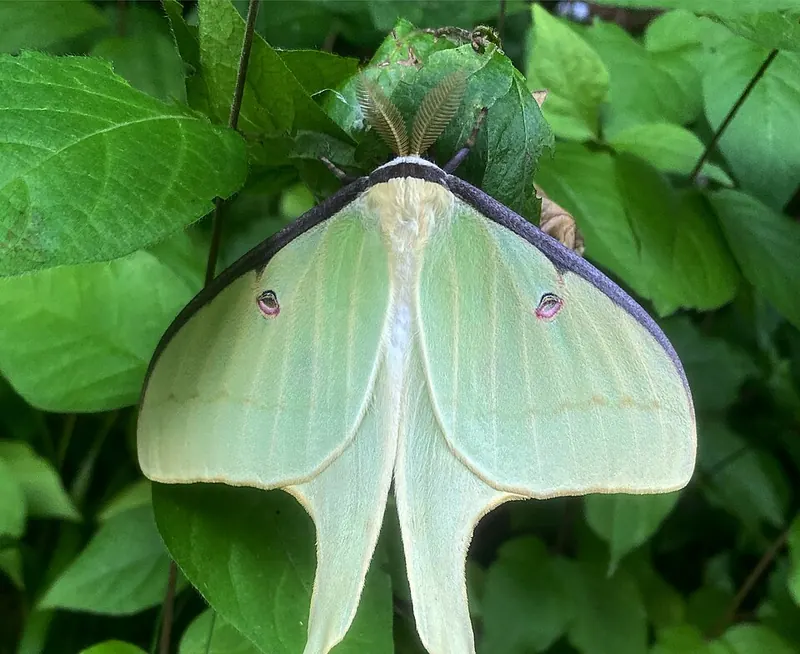
As an adult it has only vestigial mouthparts and does not feed.
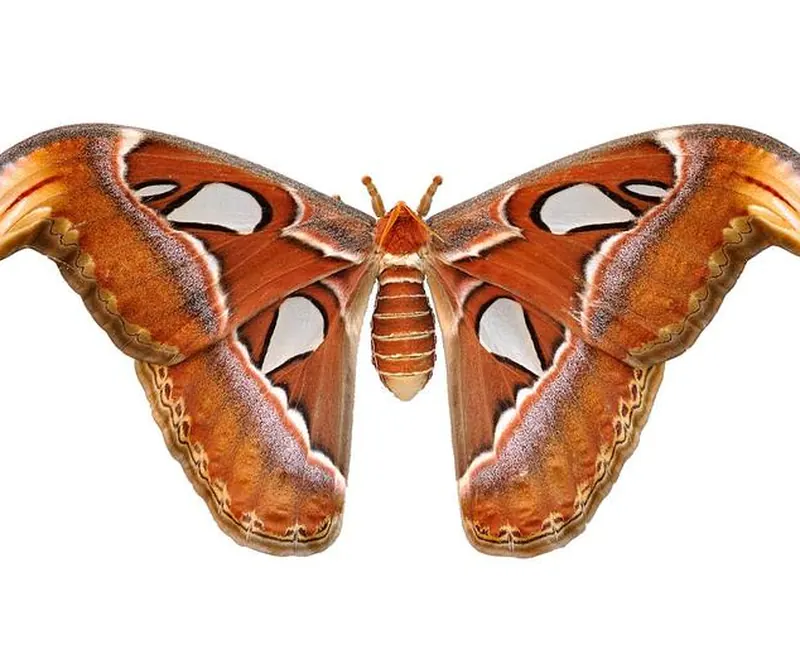
Adults cannot eat. They live for a week or two on fat stored as a caterpillar.
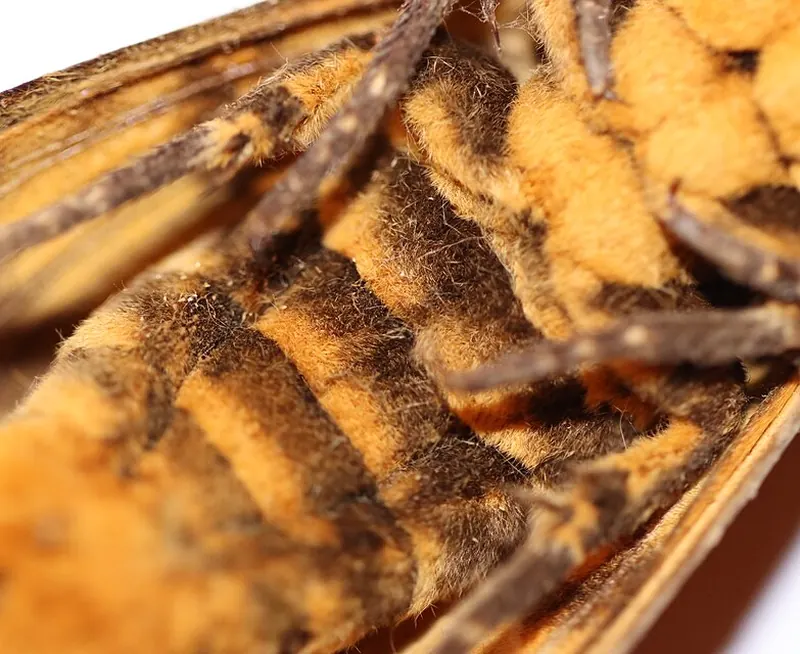
Most moths rub body parts to make noise. This one squeaks from its throat.
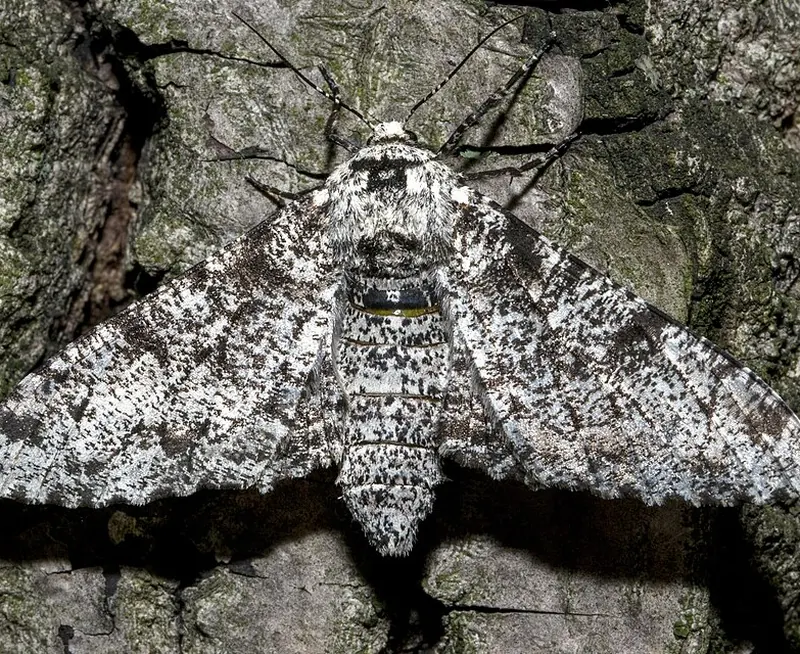
Its caterpillar can sense a twig's colour through its skin and match it.
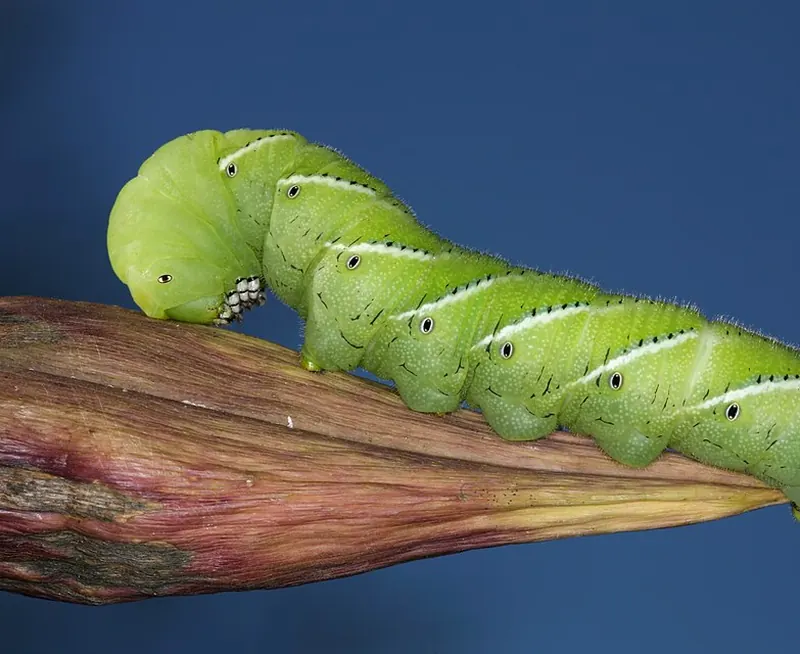
This caterpillar can store the nicotine from tobacco, then release it again.
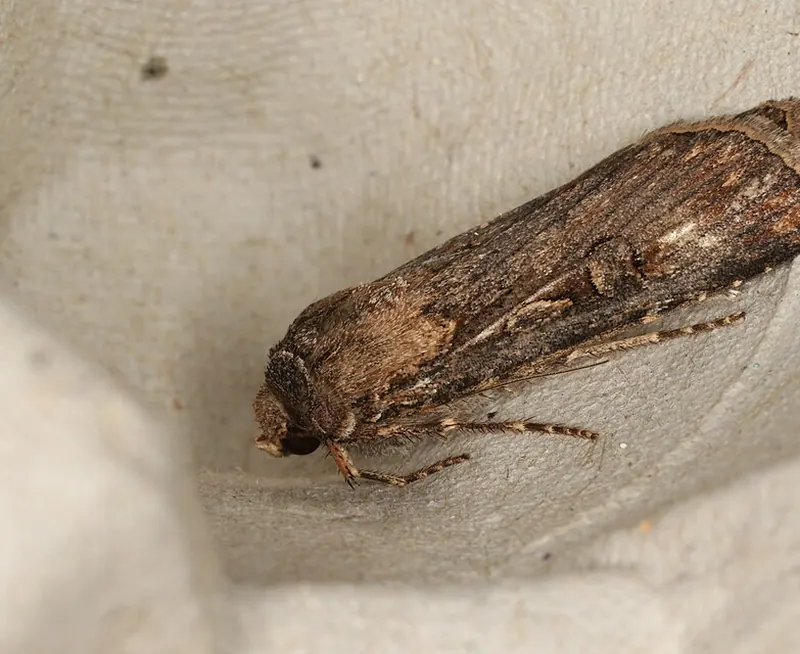
This moth can travel up to 965 km, twice a year.
Every photograph and every outline comes from a real, openly licensed image, credited at the bottom of its card. Only plain charts are drawn.
The words on these cards are written by AI from the sources named on each card. Software matched every number and claim to a sentence in those sources. Mistakes are still possible, so follow a card's links before relying on it.
Globe dots are real recorded sightings from GBIF. Where a card says native range only, they are clipped to that range. Otherwise they can include zoos, gardens and places the species was introduced.