Space science · Grades 3–5
Solar System Worksheet: Fact Sheet and Quiz
A one-page fact sheet on the eight planets with NASA photos and NASA facts, followed by a 6-question quiz. The answer key is on its own page. Switch to version B or C for a new set, or open it in the builder to change anything.
Version A · 1 page + answer key · prints on US Letter or A4Customize version A
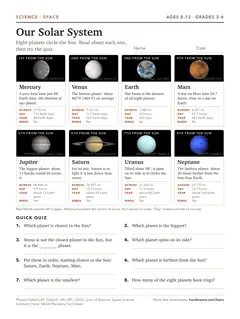
Our Solar System
Eight planets circle the Sun. Read about each one, then try the quiz.
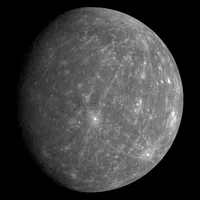 NASA/JHUAPL/CIW
Mercury
A year here lasts just 88 Earth days, the shortest of any planet.
- Across
- 3,032 mi
- Day
- 176 Earth days
- Year
- 88 Earth days
- Rings
- No
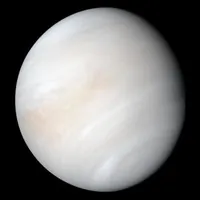 NASA/JPL-Caltech · Mariner 10
Venus
The hottest planet: about 867°F (464°C) on average.
- Across
- 7,521 mi
- Day
- 117 Earth days
- Year
- 225 Earth days
- Rings
- No
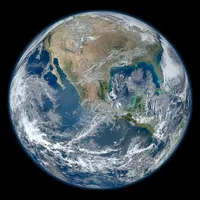 NASA · Suomi NPP
Earth
Our home is the densest of all eight planets.
- Across
- 7,926 mi
- Day
- 24 hours
- Year
- 365 days
- Rings
- No
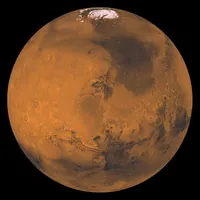 NASA/JPL/USGS
Mars
A day on Mars lasts 24.7 hours, close to a day on Earth.
- Across
- 4,221 mi
- Day
- 24.7 hours
- Year
- 687 Earth days
- Rings
- No
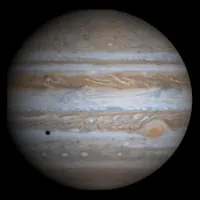 NASA/JPL/Univ. of Arizona · Cassini
Jupiter
The biggest planet: about 11 Earths would fit across it.
- Across
- 88,846 mi
- Day
- 9.9 hours
- Year
- about 12 Earth years
- Rings
- Yes
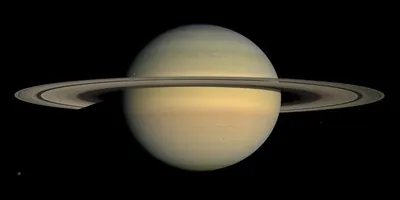 NASA/JPL/Space Science Inst.
Saturn
For its size, Saturn is so light it is less dense than water.
- Across
- 74,897 mi
- Day
- 10.7 hours
- Year
- about 29 Earth years
- Rings
- Yes
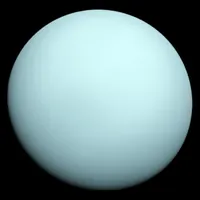 NASA/JPL-Caltech · Voyager 2
Uranus
Tilted about 98°, it spins on its side as it circles the Sun.
- Across
- 31,763 mi
- Day
- 17.2 hours
- Year
- about 84 Earth years
- Rings
- Yes
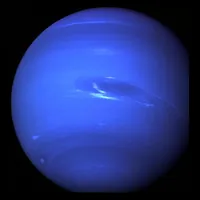 NASA/JPL · Voyager 2
Neptune
The farthest planet: about 30 times farther from the Sun than Earth.
- Across
- 30,775 mi
- Day
- 16.1 hours
- Year
- about 164 Earth years
- Rings
- Yes
Real NASA spacecraft images; NASA processed the colors of some. Not shown to scale. “Day” means sunrise to sunrise.
Quick quiz
- 1.Venus is not the closest planet to the Sun, but it is the ________ planet.
- 2.Put these in order, starting closest to the Sun: Saturn, Earth, Neptune, Mars.
- 3.Which planet is the smallest?
- 4.How many of the eight planets have rings?
- 5.On which planet is one day longer than one year?
- 6.Which planet is less dense than water?
Our Solar SystemANSWER KEY
Answers to the quick quiz, with the NASA numbers behind every fact on the sheet.
Quiz answers
- 1.Venus is not the closest planet to the Sun, but it is the ________ planet.hottest
- 2.Put these in order, starting closest to the Sun: Saturn, Earth, Neptune, Mars.Earth, Mars, Saturn, Neptune
- 3.Which planet is the smallest?Mercury
- 4.How many of the eight planets have rings?Four: Jupiter, Saturn, Uranus and Neptune
- 5.On which planet is one day longer than one year?Mercury
- 6.Which planet is less dense than water?Saturn
Where the facts come from
| Planet | NASA Planetary Fact Sheet value |
|---|---|
| Mercury | Orbital period 88.0 days; length of day 4,222.6 hours; diameter 3,032 mi (smallest) |
| Venus | Mean temperature 464°C / 867°F (highest of the eight) |
| Earth | Density 5,514 kg/m³ (highest of the eight) |
| Mars | Length of day 24.7 hours; orbital period 687.0 days |
| Jupiter | Diameter 142,984 km vs Earth 12,756 km (11.2 times); length of day 9.9 hours (shortest) |
| Saturn | Density 687 kg/m³; water is 1,000 kg/m³ |
| Uranus | Obliquity to orbit 97.8° |
| Neptune | Distance from Sun 4,515 million km vs Earth 149.6 (30.2 times) |
| Rings | “Ring system?” is Yes for Jupiter, Saturn, Uranus and Neptune only |
| Day / Year | Length of Day and Orbital Period rows. Hours over 100 divided by 24; days over 1,000 divided by 365.25 |
Source: NASA Goddard, NSSDCA Planetary Fact Sheet, nssdc.gsfc.nasa.gov/planetary/factsheet (updated March 2025).
Version B · 1 page + answer key · prints on US Letter or A4Customize version B
Our Solar System
Eight planets circle the Sun. Read about each one, then try the quiz.
NASA/JHUAPL/CIWMercury
A year here lasts just 88 Earth days, the shortest of any planet.
- Across
- 3,032 mi
- Day
- 176 Earth days
- Year
- 88 Earth days
- Rings
- No
NASA/JPL-Caltech · Mariner 10Venus
The hottest planet: about 867°F (464°C) on average.
- Across
- 7,521 mi
- Day
- 117 Earth days
- Year
- 225 Earth days
- Rings
- No
NASA · Suomi NPPEarth
Our home is the densest of all eight planets.
- Across
- 7,926 mi
- Day
- 24 hours
- Year
- 365 days
- Rings
- No
NASA/JPL/USGSMars
A day on Mars lasts 24.7 hours, close to a day on Earth.
- Across
- 4,221 mi
- Day
- 24.7 hours
- Year
- 687 Earth days
- Rings
- No
NASA/JPL/Univ. of Arizona · CassiniJupiter
The biggest planet: about 11 Earths would fit across it.
- Across
- 88,846 mi
- Day
- 9.9 hours
- Year
- about 12 Earth years
- Rings
- Yes
NASA/JPL/Space Science Inst.Saturn
For its size, Saturn is so light it is less dense than water.
- Across
- 74,897 mi
- Day
- 10.7 hours
- Year
- about 29 Earth years
- Rings
- Yes
NASA/JPL-Caltech · Voyager 2Uranus
Tilted about 98°, it spins on its side as it circles the Sun.
- Across
- 31,763 mi
- Day
- 17.2 hours
- Year
- about 84 Earth years
- Rings
- Yes
NASA/JPL · Voyager 2Neptune
The farthest planet: about 30 times farther from the Sun than Earth.
- Across
- 30,775 mi
- Day
- 16.1 hours
- Year
- about 164 Earth years
- Rings
- Yes
Real NASA spacecraft images; NASA processed the colors of some. Not shown to scale. “Day” means sunrise to sunrise.
Quick quiz
- 1.Which planet is closest to the Sun?
- 2.Venus is not the closest planet to the Sun, but it is the ________ planet.
- 3.How long is one day on Mars?
- 4.Put these in order, starting closest to the Sun: Saturn, Earth, Neptune, Mars.
- 5.Which planet is farthest from the Sun?
- 6.Which planet is the smallest?
Our Solar SystemANSWER KEY
Answers to the quick quiz, with the NASA numbers behind every fact on the sheet.
Quiz answers
- 1.Which planet is closest to the Sun?Mercury
- 2.Venus is not the closest planet to the Sun, but it is the ________ planet.hottest
- 3.How long is one day on Mars?24.7 hours
- 4.Put these in order, starting closest to the Sun: Saturn, Earth, Neptune, Mars.Earth, Mars, Saturn, Neptune
- 5.Which planet is farthest from the Sun?Neptune
- 6.Which planet is the smallest?Mercury
Where the facts come from
| Planet | NASA Planetary Fact Sheet value |
|---|---|
| Mercury | Orbital period 88.0 days; length of day 4,222.6 hours; diameter 3,032 mi (smallest) |
| Venus | Mean temperature 464°C / 867°F (highest of the eight) |
| Earth | Density 5,514 kg/m³ (highest of the eight) |
| Mars | Length of day 24.7 hours; orbital period 687.0 days |
| Jupiter | Diameter 142,984 km vs Earth 12,756 km (11.2 times); length of day 9.9 hours (shortest) |
| Saturn | Density 687 kg/m³; water is 1,000 kg/m³ |
| Uranus | Obliquity to orbit 97.8° |
| Neptune | Distance from Sun 4,515 million km vs Earth 149.6 (30.2 times) |
| Rings | “Ring system?” is Yes for Jupiter, Saturn, Uranus and Neptune only |
| Day / Year | Length of Day and Orbital Period rows. Hours over 100 divided by 24; days over 1,000 divided by 365.25 |
Source: NASA Goddard, NSSDCA Planetary Fact Sheet, nssdc.gsfc.nasa.gov/planetary/factsheet (updated March 2025).
Version C · 1 page + answer key · prints on US Letter or A4Customize version C
Our Solar System
Eight planets circle the Sun. Read about each one, then try the quiz.
NASA/JHUAPL/CIWMercury
A year here lasts just 88 Earth days, the shortest of any planet.
- Across
- 3,032 mi
- Day
- 176 Earth days
- Year
- 88 Earth days
- Rings
- No
NASA/JPL-Caltech · Mariner 10Venus
The hottest planet: about 867°F (464°C) on average.
- Across
- 7,521 mi
- Day
- 117 Earth days
- Year
- 225 Earth days
- Rings
- No
NASA · Suomi NPPEarth
Our home is the densest of all eight planets.
- Across
- 7,926 mi
- Day
- 24 hours
- Year
- 365 days
- Rings
- No
NASA/JPL/USGSMars
A day on Mars lasts 24.7 hours, close to a day on Earth.
- Across
- 4,221 mi
- Day
- 24.7 hours
- Year
- 687 Earth days
- Rings
- No
NASA/JPL/Univ. of Arizona · CassiniJupiter
The biggest planet: about 11 Earths would fit across it.
- Across
- 88,846 mi
- Day
- 9.9 hours
- Year
- about 12 Earth years
- Rings
- Yes
NASA/JPL/Space Science Inst.Saturn
For its size, Saturn is so light it is less dense than water.
- Across
- 74,897 mi
- Day
- 10.7 hours
- Year
- about 29 Earth years
- Rings
- Yes
NASA/JPL-Caltech · Voyager 2Uranus
Tilted about 98°, it spins on its side as it circles the Sun.
- Across
- 31,763 mi
- Day
- 17.2 hours
- Year
- about 84 Earth years
- Rings
- Yes
NASA/JPL · Voyager 2Neptune
The farthest planet: about 30 times farther from the Sun than Earth.
- Across
- 30,775 mi
- Day
- 16.1 hours
- Year
- about 164 Earth years
- Rings
- Yes
Real NASA spacecraft images; NASA processed the colors of some. Not shown to scale. “Day” means sunrise to sunrise.
Quick quiz
- 1.Which planet is closest to the Sun?
- 2.Venus is not the closest planet to the Sun, but it is the ________ planet.
- 3.Which planet spins on its side?
- 4.How long is one day on Mars?
- 5.Put these in order, starting closest to the Sun: Saturn, Earth, Neptune, Mars.
- 6.Which planet is less dense than water?
Our Solar SystemANSWER KEY
Answers to the quick quiz, with the NASA numbers behind every fact on the sheet.
Quiz answers
- 1.Which planet is closest to the Sun?Mercury
- 2.Venus is not the closest planet to the Sun, but it is the ________ planet.hottest
- 3.Which planet spins on its side?Uranus
- 4.How long is one day on Mars?24.7 hours
- 5.Put these in order, starting closest to the Sun: Saturn, Earth, Neptune, Mars.Earth, Mars, Saturn, Neptune
- 6.Which planet is less dense than water?Saturn
Where the facts come from
| Planet | NASA Planetary Fact Sheet value |
|---|---|
| Mercury | Orbital period 88.0 days; length of day 4,222.6 hours; diameter 3,032 mi (smallest) |
| Venus | Mean temperature 464°C / 867°F (highest of the eight) |
| Earth | Density 5,514 kg/m³ (highest of the eight) |
| Mars | Length of day 24.7 hours; orbital period 687.0 days |
| Jupiter | Diameter 142,984 km vs Earth 12,756 km (11.2 times); length of day 9.9 hours (shortest) |
| Saturn | Density 687 kg/m³; water is 1,000 kg/m³ |
| Uranus | Obliquity to orbit 97.8° |
| Neptune | Distance from Sun 4,515 million km vs Earth 149.6 (30.2 times) |
| Rings | “Ring system?” is Yes for Jupiter, Saturn, Uranus and Neptune only |
| Day / Year | Length of Day and Orbital Period rows. Hours over 100 divided by 24; days over 1,000 divided by 365.25 |
Source: NASA Goddard, NSSDCA Planetary Fact Sheet, nssdc.gsfc.nasa.gov/planetary/factsheet (updated March 2025).
How to use it
- Read the fact sheet together.
- Answer the quiz from the fact sheet.
- Check with the answer key.
- Pick version B or C for different questions.
More solar system worksheets
More for grades 3–5
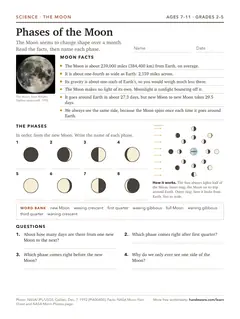 Moon Phases WorksheetGrades 2–4
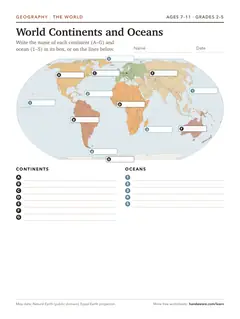 Blank Continents and Oceans Map QuizGrades 3–5
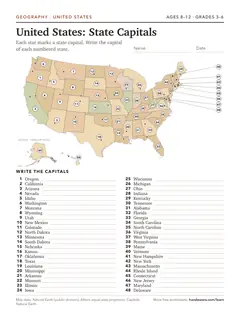 US State Capitals Quiz WorksheetGrades 3–5
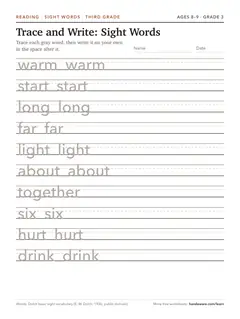 3rd Grade Sight Words Tracing WorksheetGrade 3
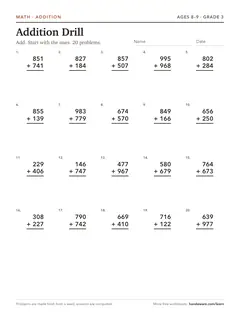 3rd Grade Addition WorksheetsGrade 3
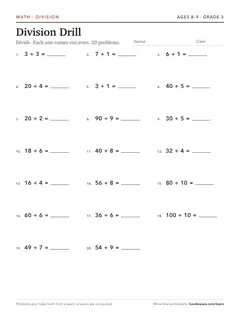 3rd Grade Division WorksheetsGrade 3
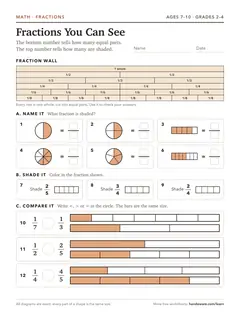 3rd Grade Fractions WorksheetsGrade 3
 Multiplication Facts: 10s WorksheetGrades 3–4